How to Handle Depression After Quitting Addiction
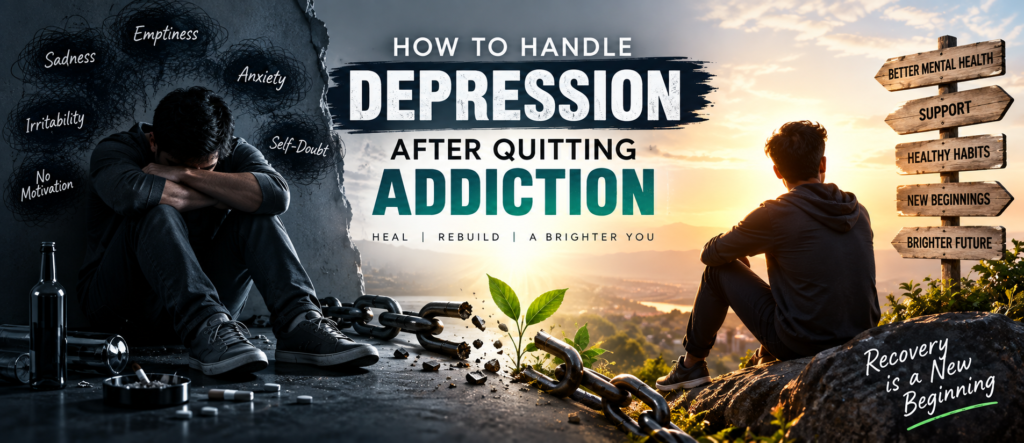
Quitting addiction is a major achievement in itself — but the road after it isn’t always easy. Many people experience sadness, emptiness, irritability, and depression anywhere from a few weeks to several months after quitting substance use. This is a completely normal part of the recovery process, but if it isn’t managed the right way, it can become one of the biggest triggers for relapse.
In this article, we’ll break down why depression happens after quitting addiction, what its symptoms look like, and medically safe ways to manage it.
Why Does Depression Happen After Quitting Addiction?
When the body becomes dependent on a substance (alcohol, opioids, tobacco, prescription drugs, etc.) over a long period, it alters the brain’s chemical balance. Substances artificially boost dopamine — the “feel-good” hormone — and after quitting, the brain needs time to relearn how to produce that same sense of well-being naturally. This phase is often referred to as Post-Acute Withdrawal Syndrome (PAWS).
Common causes include:
- Imbalance in dopamine and serotonin levels in the brain
- Disrupted sleep patterns and fatigue
- Loss of old routines and social circles built around substance use
- Feelings of guilt and regret over past behavior
- Fear of judgment from family or society
- A sense of losing purpose in day-to-day life
Common Symptoms of Post-Addiction Depression
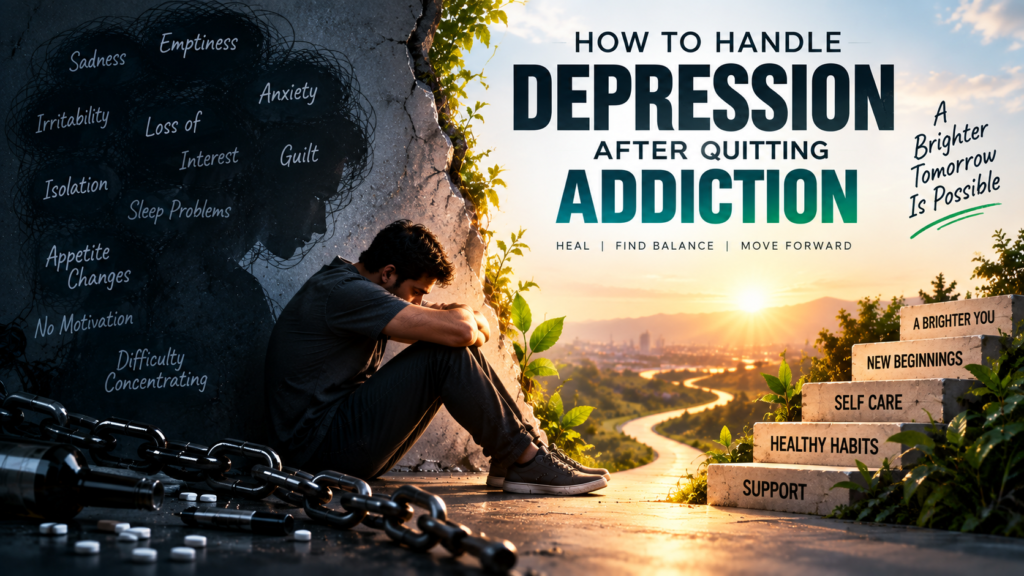
- Persistent sadness or a feeling of emptiness
- Loss of interest in activities once enjoyed
- Sleeping too little or too much
- Changes in appetite (eating too little or too much)
- Irritability and quick anger
- Feelings of worthlessness or guilt
- Withdrawing from social interactions, wanting to be alone
- Difficulty concentrating
Important Warning: If you’re having thoughts of harming yourself or ending your life, this is a medical emergency. Please reach out to a mental health professional or one of the helplines below immediately. You are not alone, and help is available.
Mental Health Helplines in India:
- KIRAN Mental Health Helpline: 1800-599-0019 (24×7, toll-free)
- iCall: 9152987821
- Vandrevala Foundation Helpline: 1860-2662-345 / 1800-2333-330
How to Safely Manage Depression After Quitting Addiction
1. Recognize It as Normal — But Don’t Ignore It
Feeling low during recovery is common, but that doesn’t mean it should be left unaddressed. Recognizing early symptoms and seeking help in time is the most important first step.
2. Get Professional Counselling or Therapy
Regular counselling with a mental health professional — such as Cognitive Behavioral Therapy (CBT) — has proven highly effective in managing post-addiction depression. Medication may also be prescribed if needed, but only under a doctor’s supervision — never self-medicate.
3. Build a Daily Routine
A fixed schedule for waking up, meals, hygiene, and light activities gives the mind stability. Unstructured free time often leaves room for negative thoughts to creep in.
4. Include Physical Activity
Light exercise, yoga, or a daily 20–30 minute walk naturally boosts endorphins — the body’s “feel-good” chemicals — which helps improve mood over time.
5. Join a Support Group
Groups like Narcotics Anonymous (NA) or Alcoholics Anonymous (AA) can be incredibly helpful. Connecting with others who’ve been through the same journey reduces feelings of isolation.
6. Prioritize Sleep and Nutrition
Adequate sleep (7–8 hours) and a balanced diet directly support the brain’s chemical recovery. Excess caffeine and sugar can worsen mood swings, so keep intake in check.
7. Stay Connected with Family
Isolation can deepen depression. Open conversations and quality time with family and trusted friends go a long way in maintaining emotional balance.
8. Set Small, Achievable Goals
Don’t expect big changes overnight. Set one small goal each day — a short walk, reading a few pages, calling a friend — and acknowledge yourself when you complete it.
Also visit us: What Is the Uttarakhand Nasha Mukt Abhiyan?
When to See a Doctor Immediately
Don’t delay professional help if you notice any of the following:
- Persistent, deep sadness lasting more than 2 weeks
- Thoughts of self-harm
- Difficulty carrying out daily tasks (bathing, eating, going to work)
- Sleep that’s completely disrupted or excessive
- Intense cravings to return to substance use
Need the Right Guidance and Support?
If you or a loved one is struggling with depression after quitting addiction, don’t try to face it alone. Safe Roof Trust offers professional counselling and recovery support to guide you through every step.
Conclusion
Feeling depressed after quitting addiction is a common — but serious — stage of recovery. With the right information, professional support, a healthy routine, and family involvement, it can be managed effectively. The key is to never ignore it and to seek help early, because mental health deserves just as much attention as physical health.
Frequently Asked Questions
It varies by individual and substance type. Mild symptoms may improve within a few weeks, while Post-Acute Withdrawal Syndrome (PAWS) can persist for several months in some cases. If symptoms persist, consult a doctor.
This depends entirely on your individual condition. Any medication should only be started after evaluation and guidance from a psychiatrist — never self-medicate.
Yes, if left unmanaged, depression is one of the most common triggers for relapse. That’s why taking early symptoms seriously is so important.