Role of Family During Recovery: The Biggest Strength in Addiction Recovery
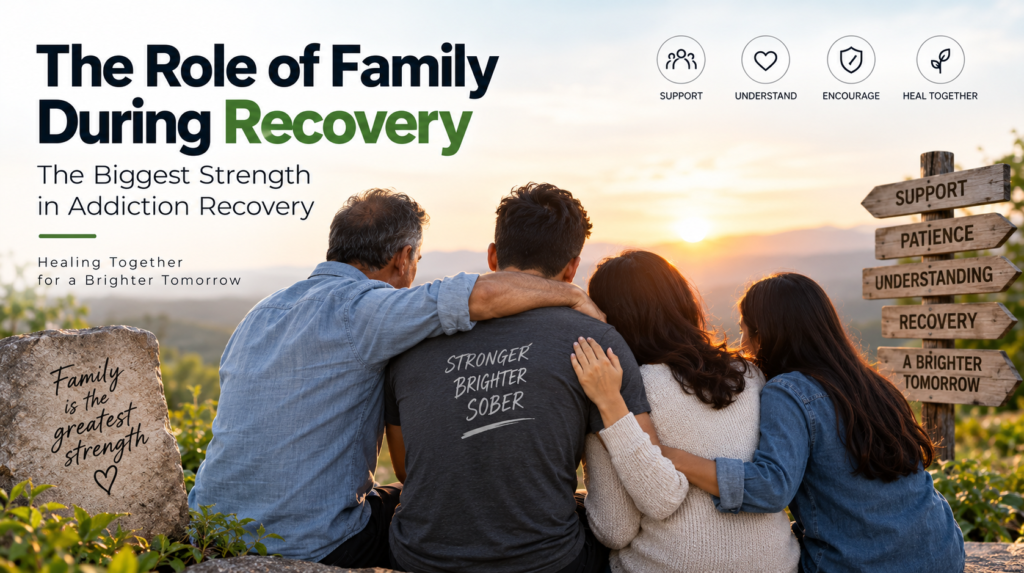
Addiction recovery is never a journey one person walks alone — it’s a journey the whole family walks together. When a loved one is trying to overcome addiction, medication and counselling matter, but the right support from family matters just as much. Research consistently shows that patients who receive strong emotional support from family have a much higher chance of long-term, lasting recovery.
In this blog, we’ll break down exactly what the role of family during recovery should look like, what to keep in mind, and which common mistakes to avoid so your loved one can move forward successfully on the path to sobriety.
Why Is Family Support So Important in Recovery?
When someone completes treatment at a rehabilitation center and returns home, the real challenge often begins right there. Moving from the structured, supportive environment of a rehab center back into everyday life isn’t easy. This is where family plays a critical role:
- Emotional security — Family presence keeps the person from feeling isolated.
- Accountability — Having someone around makes it harder to slip back into old habits.
- Confidence building — When family shows trust, the person learns to trust themselves again.
- Lower relapse risk — A strong support system significantly reduces the chances of relapse.
What Should Family Do During Recovery?
1. Stop Blaming, Start Understanding
Addiction is a disease, not a character flaw. Constantly bringing up past mistakes or making the person feel guilty only pushes them further away. Instead, make it clear that you’re standing with them, not against them.
2. Keep Communication Open and Honest
Create a home environment where your loved one can openly share their feelings, cravings, and stress without fear of judgment. Listening is often the most powerful form of therapy.
3. Help Build a Healthy Routine
A consistent sleep schedule, balanced meals, light exercise or yoga, and a new hobby can all help keep the mind stable and occupied — reducing idle time that often triggers cravings.
4. Identify and Avoid Triggers
People, places, or situations that remind your loved one of substance use should be avoided, especially in the early months of recovery. Family can play a huge role in helping identify and steer clear of these triggers.
5. Celebrate Small Wins
Whether it’s 30 days of sobriety or consistently attending counselling sessions, every small milestone deserves recognition. Celebrating progress keeps motivation alive.
6. Participate in Counselling and Follow-Ups
Family counselling isn’t just for the patient — family members should be part of the sessions too. This helps everyone understand how to support the recovery process the right way.
7. Take Care of Yourself Too
Family members often neglect their own mental health while caring for a loved one. Remember — you can’t pour from an empty cup. If needed, seek support or talk to a counsellor yourself.
Also visit us: How to Handle Depression After Quitting Addiction
Mistakes Family Should Avoid
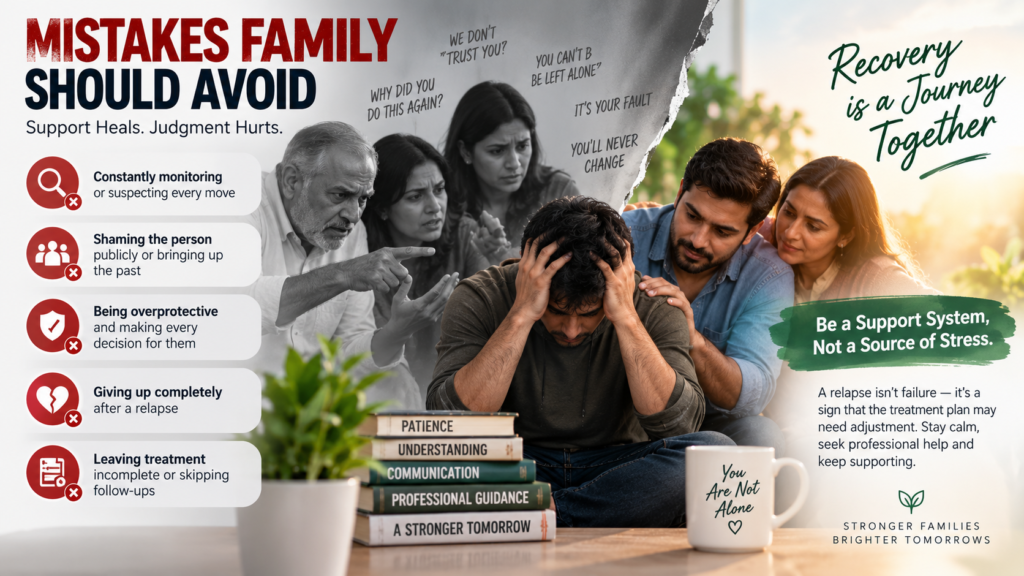
- ❌ Constantly monitoring or suspecting every move
- ❌ Shaming the person publicly or bringing up the past
- ❌ Being overprotective and making every decision for them
- ❌ Giving up completely after a relapse
- ❌ Leaving treatment incomplete or skipping follow-ups
A relapse doesn’t always mean failure — sometimes it’s simply a sign that the treatment plan needs to be adjusted. What matters most is that the family stays calm and seeks the right help immediately.
A Simple Checklist for Families During Recovery
Do | Don’t |
Be patient and listen | Bring up past mistakes repeatedly |
Stay connected with a professional counsellor | Try to “play doctor” yourself |
Celebrate small victories | Focus only on mistakes |
Support a healthy daily routine | Leave the entire burden on the patient alone |
Need the Right Support for Your Loved One's Recovery?
If someone in your family is on the road to recovery and you’re looking for guidance, family counselling support, or a trusted rehabilitation center, Safe Roof Trust is here to help. Our team is committed to supporting both patients and families at every step of the journey.
Conclusion
The journey to overcome addiction is never meant to be walked alone. Along with proper treatment, counselling, and medical care, it’s a family’s love, patience, and understanding that truly lays the foundation for lasting recovery. If someone in your family is on the path to recovery, don’t let them feel alone — because family support is often the most powerful treatment of all.
Frequently Asked Questions
Start by letting go of blame and reassuring them that the family is on their side. Then, seek professional guidance and stay involved in the treatment process.
Instead of panicking or giving up, reach out to a counsellor or rehabilitation center right away. A relapse isn’t a failure — it often signals the treatment plan needs adjustment.
Yes. Family counselling helps loved ones learn how to offer the right kind of support, which significantly improves long-term recovery success rates.