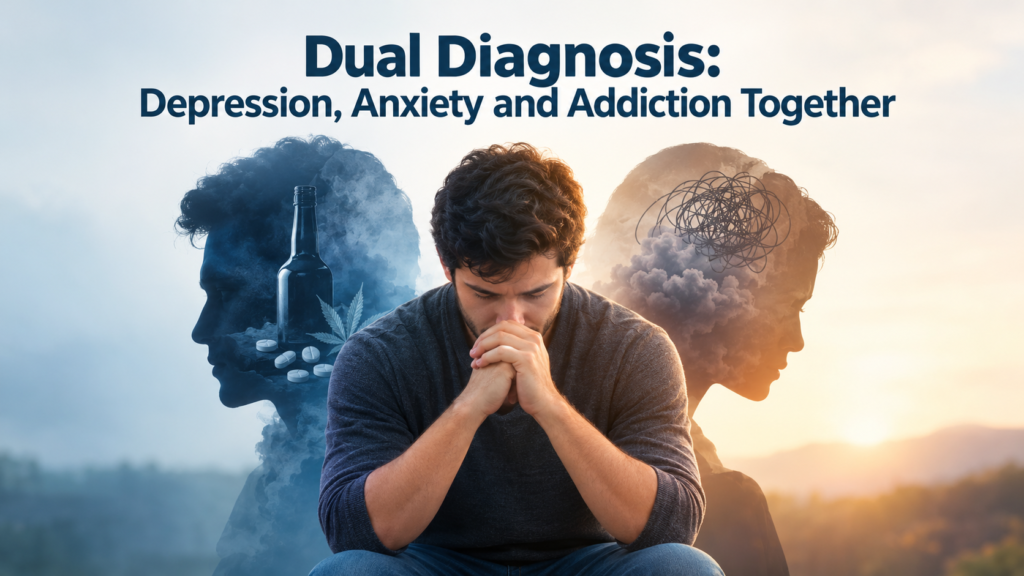
Many people struggling with alcohol or drugs also live with depression, anxiety or another mental health condition. When both exist together, it is called dual diagnosis (also known as co-occurring disorders). Treating only one usually leads to relapse, which is why understanding this link matters for patients and families.
What Is Dual Diagnosis?
Dual diagnosis means a person has both a substance use disorder and a mental health disorder at the same time. Common combinations include:
- Alcohol dependence with depression
- Opioid or cannabis use with anxiety
- Stimulant use with bipolar disorder
- Substance use with PTSD or trauma
- Addiction with panic disorder, OCD or ADHD
Read More: What Happens During the First 7 Days at a De-Addiction Centre?
How Are Addiction and Mental Health Connected?
The relationship works in both directions, and sometimes it is hard to say which came first.
- Self-medication: A person may use alcohol or drugs to ease anxiety, sadness, trauma or sleeplessness. The relief is temporary and the problem usually worsens.
- Substances worsen mental health: Long-term use can trigger or deepen depression, anxiety, panic and mood changes.
- Shared risk factors: Genetics, childhood trauma, chronic stress and brain chemistry can raise the risk of both.
Warning Signs of Dual Diagnosis
Look for a combination of substance use and emotional symptoms, such as:
- Persistent sadness, hopelessness or loss of interest
- Constant worry, restlessness or panic attacks
- Using alcohol or drugs to cope with feelings or to sleep
- Mood swings, irritability or anger outbursts
- Sleep and appetite changes
- Withdrawal from family and friends
- Difficulty stopping use despite wanting to
- Feeling worse after the substance wears off
Only a qualified doctor can diagnose dual diagnosis. Symptoms of intoxication and withdrawal can look like depression or anxiety, so assessment after a period of stabilisation is often needed.
Why Treating Only One Condition Fails
If a person stops using but their depression or anxiety goes untreated, the distress often drives them back to the substance. If only the mental illness is treated while substance use continues, medicines and therapy work poorly. Integrated treatment, addressing both together, gives the best chance of lasting recovery.
How Dual Diagnosis Is Treated
Treatment is individual, but a good programme typically includes:
- Comprehensive assessment by a psychiatrist and psychologist covering substance history, mental health and medical conditions.
- Medically supervised detox where needed, as withdrawal from alcohol and some drugs can be dangerous.
- Medication management where appropriate, prescribed and monitored by a psychiatrist.
- Psychotherapy, such as cognitive behavioural therapy, to address thoughts, triggers and coping skills.
- Group and peer support for shared experience and accountability.
- Family counselling so loved ones understand both conditions.
- Relapse prevention and aftercare, including follow-up for both addiction and mental health.
Important Safety Note
People with dual diagnosis face a higher risk of self-harm and suicidal thoughts, particularly during withdrawal and early recovery. If you or someone you know talks about suicide or self-harm, seek help immediately. Go to the nearest hospital or call emergency services. Tele-MANAS (14416) offers free, 24×7 mental health support in India. Please confirm current numbers before publishing.
How Families Can Help
- Learn that this is a medical condition, not weakness or lack of willpower
- Encourage a full assessment instead of focusing only on the substance use
- Avoid blame and harsh language
- Support medication adherence and therapy attendance
- Take care of your own mental health too
For guidance on starting the conversation, read our guide on how to convince an addicted family member to join a Nasha Mukti Kendra.
Treatment for Dual Diagnosis in Dehradun and Uttarakhand
At Safe Roof Trust, a trusted Nasha Mukti Kendra in Dehradun, we help individuals and families understand the link between addiction and emotional health and plan care that addresses both. We support families across Uttarakhand, and you can read more on our Nasha Mukti Kendra in Uttarakhand page.
Call +91 9193522331 for a free, confidential consultation.
Read More: Teen and Youth Drug Addiction in Uttarakhand: Warning Signs for Parents
FAQs
What is the difference between dual diagnosis and addiction?
Addiction refers to substance dependence alone. Dual diagnosis means addiction plus a mental health condition such as depression or anxiety.
Which mental health conditions commonly occur with addiction?
Depression, anxiety disorders, bipolar disorder, PTSD, ADHD and personality disorders are common.
Can anxiety or depression go away after quitting substances?
Sometimes symptoms improve once substance use stops, but many people need ongoing treatment for the underlying condition. A psychiatrist can assess this.
Is medication safe during addiction treatment?
Yes, when prescribed and monitored by a qualified psychiatrist. Never start or stop psychiatric medicines on your own.
Can dual diagnosis be fully treated?
Both conditions are manageable. With integrated care, many people achieve lasting recovery.
Disclaimer: This article is for general information and is not medical advice. Consult a qualified doctor for diagnosis and treatment.